
CEREC

Same‑day ceramic restorations crafted with modern digital precision for a faster, more comfortable experience.

Get a Natural-Looking Restoration in One Appointment

CEREC uses a streamlined digital workflow so patients leave with a finished ceramic restoration the same day as their visit. For many people, that means fewer appointments, less time in the dental chair, and no temporary crown to manage between visits. The system combines intraoral scanning, on‑screen design, and chairside milling to turn a planned restoration into a tangible, color‑matched piece during a single appointment.

This approach can be particularly helpful for busy adults and families who value efficiency without sacrificing quality. Because the design and fabrication happen in the operatory, your dentist can make immediate adjustments and confirm fit and appearance before the final bonding step. That gives patients a high level of control over the final outcome and reduces back-and-forth with offsite laboratories.

The practice invests in this technology to deliver restorative care that balances cosmetic goals with functional demands. Whether you need a crown, an inlay, or an onlay, CEREC lets us provide restorations that blend with your existing teeth and restore proper chewing function in a single, coordinated visit.
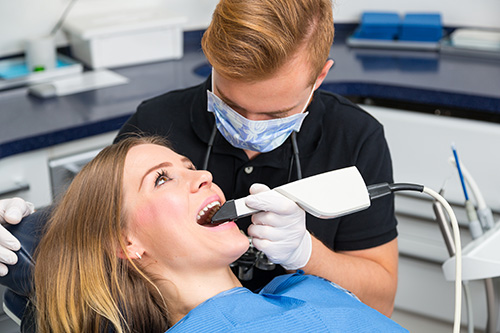
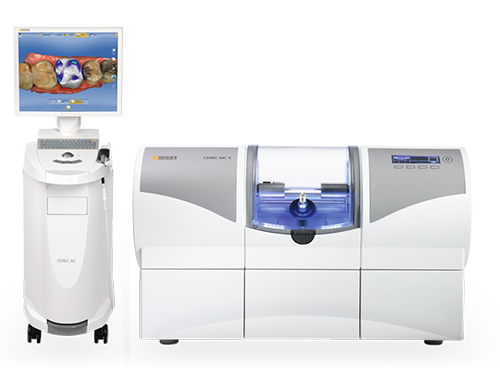
The image depicts a dental hygienist performing a cleaning procedure on a patient s teeth using a drill, with the patient sitting comfortably in a dental chair and wearing protective eyewear.

How Intraoral Scanning Replaces Messy Impressions

Instead of traditional putty impressions, CEREC relies on an ergonomic intraoral scanner to capture highly detailed, three‑dimensional images of the prepared tooth and surrounding dentition. The scanner records surface texture, margins, and occlusal relationships quickly and accurately, creating a digital model that streamlines the design process. Many patients find the scanning experience more comfortable and predictable than conventional impressions.

Those digital images are immediately available for review on a chairside computer. The dentist can rotate views, examine margins at high magnification, and collaborate with you in real time about shade and shape. Because the model is digital from the start, adjustments are faster and easier—reducing the need for multiple try‑ins or remakes.

Once the design is finalized, the data is sent to the on‑site milling unit. This closed-loop workflow eliminates transportation delays and gives the dental team direct oversight of both design and fabrication, improving consistency from planning through final placement.

For patients, the result is a restoration that fits more precisely and looks more natural, achieved through a reproducible, technology-driven process that emphasizes accuracy and control at every stage.

Ceramic Materials that Mimic Real Tooth Structure

CEREC restorations are milled from high‑quality ceramic blocks selected to match the translucency, shade, and strength required for each tooth. These ceramics are engineered to reflect light similarly to natural enamel, producing an aesthetic result that integrates smoothly with adjacent teeth. The color can be adjusted and layered to achieve a lifelike appearance that resists staining over time.

Beyond looks, the ceramics used with CEREC are biocompatible and well tolerated by gum tissue. When properly designed and polished, they create smooth contours that support healthy soft tissue and minimize plaque accumulation. That combination of esthetics and tissue compatibility makes CEREC an excellent option for visible front teeth as well as functional posterior restorations.

Because the restoration is created from a single block of ceramic, it often provides a balanced combination of strength and beauty suitable for a variety of indications, including crowns, inlays, and onlays. The dentist selects the material and translucency level based on the tooth’s position, bite forces, and cosmetic needs to ensure a tailored result for each patient.

What Happens During a CEREC Visit

A typical CEREC appointment follows a clear sequence designed for patient comfort and clinical precision. After a thorough exam and any necessary local anesthesia, the tooth is prepared and shaped to accept a restoration. The dentist then scans the area with the intraoral wand, capturing a digital impression that becomes the basis for the restoration’s design.

After reviewing the scanned images and discussing aesthetic preferences, the dentist uses CAD software to design the restoration on-screen. This stage allows fine tuning of contacts, contours, and occlusion so the restoration will function harmoniously with the bite. Once the design is approved, the file is sent to the chairside milling unit, which fabricates the ceramic piece while you remain comfortably in the operatory.

When milling is complete, the dentist refines and polishes the restoration, checks the fit, and completes any staining or glazing needed for a seamless match. Finally, the restoration is bonded to the tooth using proven adhesive protocols. Because the entire process is completed on-site, adjustments and final approval happen during the same visit, offering patients a single-day solution without compromising clinical standards.

Throughout the appointment, the team focuses on clear communication and gentle care so patients understand each step and feel comfortable with the pace of treatment. Many find the single‑visit workflow to be less disruptive to their schedules while still delivering an individualized, high-quality result.

Keeping Your Restoration Healthy Over Time

Long-term success for any restorative treatment depends on good home care and routine professional maintenance. Daily brushing, flossing, and the use of interdental aids where recommended help prevent decay at margin lines and protect surrounding teeth. Regular dental checkups allow the dentist to monitor the restoration, check contacts and occlusion, and perform professional cleanings that reduce the risk of gum inflammation.

Avoiding habits that place excessive stress on restorations, such as chewing ice or using teeth to open packaging, will help preserve the integrity of the ceramic. If you participate in contact sports, a protective mouthguard can reduce the chance of traumatic damage. If you notice any sensitivity, looseness, or change in bite, contact the office for an evaluation so small issues can be addressed early.

When restorations are well cared for, they continue to perform functionally and cosmetically for many years. Your dental team will provide personalized recommendations for maintenance intervals and any protective measures that fit your oral health needs and lifestyle.

In short, CEREC blends digital precision, tooth‑matching ceramics, and in‑office fabrication to make same‑day restorations both practical and predictable. If you’d like to learn whether this approach is right for your situation, contact Complete Dental Care of Fishers for more information and a personalized consultation.

Frequently Asked Questions

What are CEREC® same-day crowns?

+

Today, there's no need to merely imagine how nice it would be to have a dental crown fabricated in a single visit. With CEREC technology and advanced systems of care, multiple trips to the dentist are a thing of the past! Now, one appointment is all it takes for our skilled and experienced dentist to design, fabricate, and place a naturally beautiful and long-lasting same-day crown. And, best of all, unlike conventional methods of care, you won't have to endure messy dental impressions, wear a temporary crown, or wait weeks for your permanent restoration to come back from the laboratory.

How are CEREC® same-day crowns made?

+

Offering a level of precision and comfort that exceeds conventional methods of care, CEREC technology is nothing short of amazing! Advanced CAD/CAM technology, which stands for computer-aided design and computer-aided manufacturing, enables our dentist to translate images from an optically scan tooth into a 3D virtual model upon which a custom crown can be digitally designed. Once this step is done, the detailed specs are then wirelessly transmitted to a chairside 3D milling machine to fabricate your new ceramic crown while you wait!

What are the benefits of CEREC® same-day crowns?

+

With conventional methods of care, a dental crown can take two to three visits to fabricate and place. However, thanks to the benefits of CEREC technology, we can prepare a tooth, then design, fabricate, and place your new crown, all while you wait.

With CEREC same-day crowns, there's none of the mess of conventional dental impressions, wearing dental temporaries, or waiting for the final crown to come back from the lab. Once the prepared tooth is optically scanned and the restoration digitally designed, your new crown can be milled from the highest quality of dental ceramics that very same visit.

Will my CEREC® same-day crown look natural?

+

CEREC same-day crowns and restorations are fabricated from the highest quality of dental ceramics. Because dental porcelain reflects light in much the same way as dental enamel, your new crown will look flawless, completely natural, and blend seamlessly with your smile.

Do CEREC® same-day crowns last a long time?

+

A CEREC same-day crown offers much more than a convenient approach to getting a dental crown. It is also a high quality, naturally beautiful, extremely durable, and long-lasting dental restoration! The fact is, with proper oral hygiene and routine dental care your new crown will serve your smile well for many years to come.

What is CEREC and how does it work?

+

CEREC is a chairside CAD/CAM system that allows a dentist to design, mill, and place ceramic restorations in a single appointment. The workflow begins with an intraoral scan that creates a highly accurate three-dimensional model of the prepared tooth and surrounding dentition. That digital model is used to design the restoration on-screen, then the design is sent to an on-site milling unit that fabricates the ceramic piece while the patient remains in the operatory.

After milling, the dentist refines, polishes, and shades the restoration as needed before bonding it to the tooth using proven adhesive protocols. Because design and fabrication occur within the same visit, CEREC reduces turnaround time and eliminates the need for temporary crowns and a second appointment. The process emphasizes precision at every step, from digital capture through final placement.

What are the main benefits of a same-day CEREC restoration compared with traditional lab-made crowns?

+

Same-day CEREC restorations typically require fewer appointments because the design and fabrication occur on-site during one visit. Patients avoid temporary crowns and the inconveniences that come with multiple trips, and dentists can verify fit, contacts, and aesthetics immediately before final bonding. The closed-loop digital workflow reduces the potential for errors introduced by physical impressions and laboratory handoffs.

Clinically, CEREC allows for tight quality control since the treating dentist oversees both design and milling, which can improve consistency between planning and final fit. From a patient perspective, the experience is often more comfortable and predictable due to the elimination of traditional impression material and the ability to review the proposed restoration on-screen. These operational advantages often translate into a smoother restorative appointment without compromising clinical standards.

What materials are used for CEREC restorations and how do they compare to natural tooth structure?

+

CEREC restorations are milled from high-quality ceramic blocks chosen for their strength, translucency, and biocompatibility. These ceramics are engineered to mimic the way natural enamel transmits and reflects light, producing an aesthetic result that blends with adjacent teeth. Because the material comes in a range of shades and translucencies, the dentist can select the block that best matches each patient’s natural dentition and, when needed, apply staining or glazing for finer color adjustments.

Beyond aesthetics, the ceramics used with CEREC are durable and resist staining when properly finished and maintained. They are also well tolerated by soft tissues when margins are designed and polished correctly, which supports periodontal health around the restoration. The selection of a specific ceramic is based on the tooth’s location, occlusal forces, and cosmetic needs to balance strength and appearance for long-term function.

Who is a good candidate for CEREC crowns, inlays, or onlays?

+

Many patients are good candidates for CEREC restorations, including those who need crowns, inlays, or onlays and prefer a single-visit solution. Ideal cases include teeth with moderate to large restorations, fractured restorations, or cosmetic concerns where a well-fitting ceramic solution will restore form and function. Patients who dislike traditional impressions, who have busy schedules, or who want to avoid temporary restorations often find CEREC particularly appealing.

That said, candidacy is determined case by case and depends on factors such as the extent of remaining tooth structure, bite forces, and aesthetic goals. Complex cases that require extensive laboratory customization, metal frameworks, or multidisciplinary treatment planning may be better served with alternative approaches. A clinical exam and discussion with the dentist will identify whether a CEREC restoration is the most appropriate choice for an individual patient.

What should I expect during a CEREC appointment at the office?

+

During a typical CEREC visit the appointment begins with a clinical exam and any needed anesthesia to ensure comfort while the tooth is prepared. The dentist prepares the tooth and then uses an intraoral scanner to capture detailed digital images, which are reviewed on a chairside computer and used to design the restoration with CAD software. Once the design is finalized, the on-site milling unit fabricates the ceramic restoration while the patient remains in the operatory.

After milling, the dentist adjusts contours, polishes or applies glazing as needed, checks occlusion and contacts, and bonds the restoration with adhesive protocols. The single-visit workflow allows immediate verification of fit and aesthetics and typically eliminates the need for temporary crowns or additional appointments. Patients often appreciate the efficiency and the opportunity to approve the restoration during the same visit.

How long do CEREC restorations typically last and what factors influence their longevity?

+

CEREC restorations can provide many years of functional service when designed, placed, and maintained properly, with longevity influenced by material selection, the quality of the adhesive bond, and the level of occlusal stress. Teeth restored in low- to moderate-stress areas tend to have longer service lives, while restorations in high-force regions require careful material choice and occlusal management. Proper tooth preparation, margin design, and laboratory or chairside finishing all contribute to a durable restoration.

Patient habits and oral hygiene play a significant role in outcomes; avoiding parafunctional habits like bruxism, chewing hard objects, or using teeth as tools reduces the risk of chipping or fracture. Regular dental checkups allow the team to monitor margins, contacts, and occlusion so early signs of wear or compromise can be addressed. With attentive care and periodic evaluation, many CEREC restorations continue to perform well for years.

How do intraoral digital scans improve accuracy compared with traditional impressions?

+

Intraoral scanners capture detailed, three-dimensional images of the prepared tooth and surrounding anatomy, recording surface texture, margin detail, and occlusal relationships with high resolution. The resulting digital model can be examined at multiple angles and magnifications, allowing the dentist to identify and correct potential issues before fabrication. Because the file is digital from the outset, it eliminates errors related to impression material distortion, pouring models, and laboratory transfers.

The immediate availability of the scan also streamlines communication between the dentist and the patient, enabling on-screen discussions about shape and shade before milling. For the dental team, the digital workflow accelerates adjustments and reduces remakes since modifications can be implemented quickly within the design software. Overall, digital scans enhance predictability and efficiency in restorative cases.

Are CEREC restorations appropriate for front teeth and cosmetic cases?

+

CEREC restorations can be an excellent option for many cosmetic cases, including anterior crowns, inlays, and onlays, because modern ceramics closely mimic the optical properties of natural enamel. The dentist can select high-translucency blocks and apply staining or glazing to fine-tune the appearance, producing results that integrate with adjacent teeth. When precise color matching and contouring are important, the ability to review and adjust the restoration in real time is a distinct advantage.

However, achieving the highest level of cosmetic refinement may sometimes require additional techniques such as layered ceramics or laboratory characterization in complex shade situations. The decision to use CEREC for a visible front tooth depends on the individual aesthetic goals, the complexity of the case, and the dentist’s assessment of the most appropriate materials and finishing methods. A consultation will clarify whether a chairside restoration meets the desired cosmetic outcome.

What situations or limitations might make a lab-fabricated crown a better choice than CEREC?

+

There are cases where lab-fabricated crowns are preferable, such as when a restoration requires specialized materials, multi-layered porcelain artistry, metal substructures, or extensive customization beyond typical chairside capabilities. Full-mouth reconstructions or restorations that need complex shade characterization and staining may benefit from the technical resources of a dental laboratory. Additionally, certain implant restorations and some multi-unit fixed prostheses often require lab fabrication for optimal fit and strength.

Another consideration is access to specialized materials or techniques that a laboratory can provide, including certain metal-ceramic combinations or advanced layering protocols. In these scenarios the dentist will weigh clinical demands, aesthetic expectations, and functional requirements to recommend the best fabrication route. The choice always prioritizes long-term function and appearance over convenience alone.

How should I care for my CEREC restoration after placement?

+

Post-placement care for a CEREC restoration is similar to care for natural teeth and other types of restorations: maintain daily brushing and flossing, attend regular professional cleanings, and follow any specific instructions provided by the dental team. Using a nonabrasive toothpaste and avoiding excessively hard foods or habits like ice chewing will help preserve the polished ceramic surface. If you have a history of grinding or clenching, the dentist may recommend a nightguard to protect the restoration from undue stress.

During routine checkups the dental team will evaluate the restoration’s margins, contacts, and occlusion and perform any necessary adjustments to maintain proper function. Report any new sensitivity, looseness, roughness, or changes in your bite promptly so the office can address concerns early. With consistent home care and periodic professional monitoring, CEREC restorations can remain healthy and functional for many years.

Hours of Operation

Monday
8:00 am - 5:00 pm
Tuesday
7:00 am - 4:00 pm
Wednesday
7:00 am - 4:00 pm
Thursday
7:00 am - 4:00 pm
Friday
By Appointment Only